Organizing a Congress in Istanbul: Venues, Logistics, and Strategic Tips
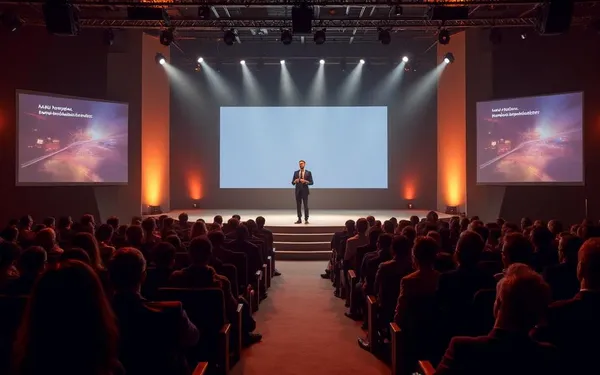
Istanbul has consistently been one of the world's most preferred congress cities in ICCA (International Congress and Convention Association) rankings. This is no coincidence: its geographical location facilitates access between Europe, Asia, the Middle East, and North Africa; Istanbul Airport is one of the world's largest hubs with over 90 million annual passenger capacity; metro, Marmaray, and ferry networks strengthen intra-city mobility; and its millennia-deep cultural heritage adds incomparable depth to the social side of any congress program. A professionally built congress on this foundation offers participants an unforgettable gathering both in content and experience.
Venue selection is the most critical decision in organizing a congress in Istanbul. The city offers a rich portfolio of venues able to respond to different participant volumes and congress types. The Lütfi Kırdar International Congress and Exhibition Center (ICEC), in the heart of Harbiye, is preferred for medium-to-large congresses with its multi-hall structure and central location. The Haliç Congress Center, with its modern architecture overlooking the Golden Horn and spacious foyers, suits large congresses with exhibition components. The Istanbul Congress Center (ICC), in the same district, is the largest-capacity facility, hosting up to 3,000 participants in a single hall. In addition, five-star congress hotels (Hilton Bomonti, Swissôtel, Conrad, Grand Hyatt, Four Seasons Bosphorus, and others) offer accommodation and meeting space under one roof, providing logistical advantages for large groups. Museum event halls on the historical peninsula, historical mansions along the Bosphorus, and converted industrial heritage venues such as Tersane Istanbul are unique alternatives for gala dinners and signature evenings.
Criteria for choosing the right venue are as varied as participant numbers. Hall capacity and flexibility, parallel session counts, foyer adequacy for exhibitions and sponsor booths, technical infrastructure (sound, lighting, projection, simultaneous translation booths), internet bandwidth, accessibility, parking, the number of nearby hotels, and airport transfer time must all be assessed. Security infrastructure, fire safety, on-site medical staff capacity, and emergency evacuation plans must be verified before signing.
Logistics planning is the invisible but decisive backbone of congress organization. In Istanbul, logistics first brings traffic management to mind. Aligning the program to the city's traffic patterns, shifting transfers outside peak hours, and staggering group arrivals and departures are foundations of a successful operation. Airport transfers should be planned with official meet-and-greet, fast-track passport services, and VIP protocol vehicles. Shuttle systems between hotels and the congress venue must be prepared minute by minute with buffer times for delays.
Participant management is the area most shaped by technology in modern congresses. Online registration platforms, mobile congress apps, QR-coded badges, session-level attendance tracking, instant feedback surveys, and certificate automation are now mandatory. For international participants, visa invitation letters, hotel reservations, transfer matching, and a language support hotline must be set up. For a multilingual congress, simultaneous translation systems, experienced interpreters, and technical redundancy are essential.
The social program is the greatest competitive advantage of a congress held in Istanbul. A gala dinner on a private boat on the Bosphorus, a cocktail at Topkapı or Dolmabahçe Palace, a classical music recital at the Basilica Cistern, a sushi evening on the Asian side — these experiences transform the congress from "a meeting attended for work" into "a gathering remembered for a lifetime." In this sense, Istanbul offers a combination very few cities in the world can: weaving serious content with a magnificent, emotional social flow.
Practical tips for organizing a congress in Istanbul include early planning (venue booking 12–18 months in advance), avoiding date conflicts with major congress calendars, completing main sponsor contracts early, clarifying communication flow between the academic committee and the DMC, and managing participant data in compliance with KVKK. At Magnus DMC, drawing on our experience as the local partner of dozens of international congresses in Istanbul, we design every project to represent the city's strong potential at its highest, taking over the unseen, exhausting hours from organizing committees and protecting their most valuable resource — time.